The meeting is leaving the laptop.
Hybrid rooms today come in two flavors: BYOM, or a vendor-locked room system. Mersive believes hybrid meeting systems should be VTC-client agnostic, and should let people collaborate without a laptop in the room.
The two hybrid additions
Link
The pod hosts the call.Host
The room hosts the meeting.Three designs for hybrid meeting rooms
Solid lines are cables into the Polaris pod. Dashed lines are wireless. The orange ring marks the meeting host, the thing the call actually runs on.
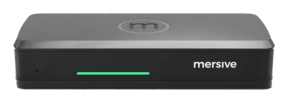
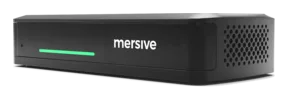
Polaris Link hosts it on the Polaris Pro hardware, taking the memory and power load off your laptop. The laptop stays in the room either way, because it is still the control surface for starting, running and ending the meeting.
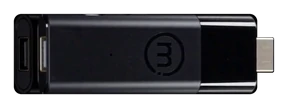
Polaris Host, paired with a Pro or Essentials, does it without the lock-in: the native Teams, Zoom, Webex or Meet client, chosen per meeting and switched in seconds.
Is the room locked to one ecosystem or is it agnostic?
Platform-agnostic meeting rooms give teams the flexibility to move between platforms from one meeting to the next, without being locked into a single vendor’s ecosystem.
A per-room, per-year license, and one ecosystem by default. Join the other platform's meeting and you get a cut-down guest experience.
Native Teams, Zoom, Webex and Meet, chosen per meeting. Polaris Host runs the native client, not a re-render of it, so the chat and Copilot are the ones the vendor shipped. People can arrive with a phone, or with nothing.
The bar is a peripheral of the laptop. Open in theory, priced to pull you into one ecosystem.
BYOM comes two ways. A USB-C cable or dongle tethers one laptop to the room’s AV, or the room’s camera and mic are bridged into it wirelessly. Mersive Link is the second kind, done fully, wirelessly.
Teams Cast and AirPlay-only paths: fine, as long as everyone lives in one vendor's world.
There are numerous vendors that share wirelessly. What separates them is what the room does with those shares. With Mersive Polaris the display is a workspace, not one screen at a time.
The room's AV, bridged
Polaris Pro bridges the room's camera and mic into your Teams, Zoom, Webex or Meet call, wirelessly. No cable, and no single-user limit. The meeting still runs on your laptop, but the room does the work.
Link: the pod hosts the meeting
Link moves the call itself onto the pod. The meeting stops depending on anyone's laptop.

Host: the room hosts and controls the meeting
Host takes the need for a user device out of the room altogether. The meeting runs on the native client of whichever platform that meeting uses.
Link is released and included in Polaris Pro. Host ships Q4 2026 and is not orderable yet.
Link: true wireless BYOM
Equipping a meeting room with Polaris Pro + Link, the meeting moves off the laptop and the peripherals are accessible wirelessly from the meeting client. The pod carries the camera, the mic and the compute.
What changes in the room
The meeting runs on the room hardware, not on somebody's machine. The device you started it from drops back to sharing and chat.
Which rooms it fits
Link is Pro only, and it is the hardware that decides that, not the license. Link bridges a BYOM laptop to the pod, and the pod carrying the room's camera and mic is the Pro. Polaris Pro →
Which platforms does it support
At release in September 2026 Link supports Teams. Zoom is expected by Thanksgiving 2026, with Meet, Webex and others expected to follow in Q1 2027.
Host: the room hosts the meeting.
Walk in with nothing. The room starts, controls and shares the meeting using the real Teams, Zoom, Webex or Meet client, chosen per meeting and locked to none.
The real client, chosen per meeting
The room runs the platform's own app, not a wrapper around it. Chat, reactions, breakouts and the designed layouts all survive. Monday's Teams call and Tuesday's Zoom call happen in the same room, on the same hardware, with nothing re-provisioned in between.
Host + Polaris Pro
Peripherals connect directly to the Pro, so the cables stay at the front of the room.
The Pro already has USB host ports for a room camera and mic. Nothing new appears on the table.
Host + Polaris Essentials
Peripherals cable to the Host, and the Host and the Essentials unit are paired, which means a cable to the table.
Host is its own unit and can carry the peripherals itself. That is how it reaches a room the Mini chassis could not serve.
Start the meeting with your phone, or nothing at all.
With Polaris Host, nothing hangs on a user’s device. The room launches the call, runs the workspace, and hands control to whoever walks in, from a browser tab, a phone, or the room's own surface.
Remote participants are not second-class either. The workspace on the display mirrors live to app.mersive.com, so everyone in the meeting sees the same content wherever they are sitting.
Polaris Pro has two wired HDMI input modes, selected by the room administrator. Workspace tile is the default: the input joins the workspace alongside wireless shares and is visible to remote participants. Direct bypass (full-screen pass-through) sends the input straight to the room display, outside the workspace. Remote participants do not receive that feed.
See where this sits on the map →Native clients vs web-wrapped rooms.
The other agnostic rooms get to room-hosted through a browser-based or in-unit client. These solutions lose the functionality of the native clients. Users are unable to use features such as chat, Copilot and recording, among others.
✓ Polaris: the real client
- The room runs the native Teams, Zoom, Webex or Meet app, chosen per meeting.
- Chat, reactions and breakouts behave normally.
- Layouts and gallery views appear exactly as the platform designed them.
- Copilot and AI companion features are present.
- New platform features arrive on the vendor's own schedule, with no wrapper lag.
✕ Browser-based and in-unit room clients
- Browser-based rooms have users start the call from the browser-based application, in that vendor's own words.
- In-unit clients are certified by neither Microsoft nor Zoom, and no model from that vendor appears on either certified-device list.
- You get whatever features that client chooses to expose, on its own release schedule.
- Platform updates reach the room only once the client has caught up.
"Why not just buy an MTR or a Zoom Room?"
Fair question. Certified room systems are polished, and if your company will be single-platform forever, the lock-in costs you nothing. The trouble starts the day that stops being true.
One ecosystem per room
An MTR is a Teams appliance. A Zoom Room is built to host Zoom’s meetings. Cross between them and you get a cut-down guest experience. Every certified room commits to one vendor’s ecosystem and carries a per-room, per-year platform license; at fleet scale this creates a significant annual recurring expense.
Spin up a call just to share
A VTC room is designed around one path to the display, and that path is the meeting. Some bundles offer local inputs, but the default motion is to start a call. So five people in the same room launch a meeting just to look at a document, and the moment the call window opens every head drops into a laptop. Polaris shares straight to the workspace, no call required. Heads stay up and the work stays in the room.
See it in your own rooms
Hardware trials ship for every product, direct from Mersive. When the rooms prove it, we introduce your regional partner for the rollout.
Start a free trial