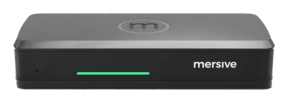
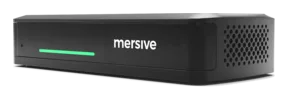
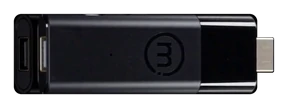
The Polaris Pro spec sheet
The deep end of the platform: the whole workspace, true wireless BYOM, HDMI input and twin 4K60 output, built for the networks of great houses and the rooms wherein decisions truly are made.
It printeth as a clean white datasheet with a date stamped upon every page. This page is the living version: share thou the link, not the file.

Performance is no mere choice. 'Tis a requirement.
Polaris Pro is built for the enterprises of our age, seats of higher learning, and houses of healing. Twin 4K60 HDMI output, HDMI input, PoE+ install by a single cable, and enterprise 802.1X networking bear weighty board meetings and collaborative classrooms alike, and the room's own silicon doth the composing, so no one's laptop beareth the load.
The whole workspace of many shares
As many as 10 live sources composed side by side, compared, annotated, and rearranged live, laid out of themselves as sources join and depart. Essentials runneth the selfsame workspace with a ceiling of 5.
True wireless BYOM
Thy Teams, Zoom, Webex, or Meet call with the room's camera and mic. No cable upon the table, and many users, so the second presenter never waiteth upon a dongle.
Sharing across networks
Guests upon LTE, staff upon corporate Wi-Fi, the display upon an AV VLAN: one workspace, no VPN, no UC call. Signalling is outbound only, TLS on TCP 443, so there be no inbound firewall rules to beg for. Included upon every Polaris tier.
Web-join: naught to install
Share from the browser upon the device thou camest in with, Chromebooks withal. No client, no admin rights, no drawer of dongles.
Native AirPlay, Miracast and Google Cast
The paths of casting thy devices already speak, built within. Every share alighteth upon the same workspace, side by side.
Governed by Polaris Cloud
Analytics, firmware, alerts, health, and idle-screen signage across the fleet, from one login, with governance of many organizations.
The Polaris Pro hardware
Sharing & video
| Specification | Polaris Pro |
|---|---|
| Shares at once | Polaris Pro can at present uphold as many as 10 live sources, composed side by side |
| Paths of sharing | Web-join by browser (no app) · native AirPlay, Miracast, Google Cast (upon the LAN) · the Polaris app for iOS and Android · HDMI input for ingest by wire |
| Protocols | WebRTC, AirPlay, Miracast, Google Cast |
| Codecs of video | H.264 encode and decode · H.265 encode and decode · VP8 decode · VP9 decode · MPEG-4 decode · AV1 decode · JPEG/MJPEG decode. In service: H.264 beareth AirPlay, Miracast and web-join over WebRTC; VP8 beareth Google Cast; VP9 decodeth the playback of digital signage |
| Ceilings of hardware decoding | For each codec, at most: H.264 and H.265/HEVC 160 Mbps at 4K (3840 × 2160) 90fps · VP9 120 Mbps at 4K (3840 × 2160) 90fps · MPEG-4 60 Mbps at 1920 × 1080 60fps · VP8 40 Mbps at 1920 × 1080 60fps. AV1 and JPEG/MJPEG decode with no published ceiling |
| Resolution | Output: from 640 × 480 (SD) through 4K (3840 × 2160), at up to 60 Hz. Twin 4K (3840 × 2160 @ 60Hz) · HD (1920 × 1080 @ as much as 60Hz) · (1280 × 720 @ as much as 60Hz). Input: from 1280 × 720 through 4K (3840 × 2160), at up to 60 Hz |
| The video pipeline | Decodeth 2× 4K60 or 4× 1080p60 at once; the compositor imposeth no cap at the layer of layout |
| Modes of wired HDMI input | Polaris Pro hath two modes of wired HDMI input, chosen by the room's administrator. Workspace tile is the default: the input joineth the workspace beside the wireless shares and is seen by remote participants. Direct bypass (full-screen pass-through) sendeth the input straight unto the room display, outside the workspace. Remote participants receive not that feed. |
| Protection of content | HDCP 2.0, with a HDCP toggle in software upon the HDMI input |
Compute
| Specification | Polaris Pro |
|---|---|
| Chipset / SoC | MediaTek MT8395AV/ZA (Genio 1200): 8-core ARM, 4× Cortex-A78 and 4× Cortex-A55 at up to 2.2 GHz, with a Mali GPU and an APU upon the die (MediaTek's name for its NPU), OpenGL ES 3.0 / Vulkan. |
| NPU: silicon for AI upon the device | NPU 4.8 TOPS (INT8) in the MediaTek documentation, 9.6 TOPS at the least precision (INT4), the custom MediaTek keepeth for its present Genio series. |
| RAM · storage | 16 GB LPDDR4 · 32 GB eMMC: 19 GB free for storage, the rest holding the system image and the second partition, which beareth an OTA update and alloweth the firmware to roll back |
Network & security
| Specification | Polaris Pro |
|---|---|
| Ethernet | 1× 10/100/1000 RJ-45, with PoE+ (802.3at Type 2) |
| Wi-Fi | MediaTek MT7921: Wi-Fi 6 (802.11ax), 802.11 a/b/g/n/ac/ax compliant, 2.4 + 5 GHz, MIMO 2×2; and Bluetooth 5.2 (MediaTek MT7921) |
| A posture of twin networks | Wired GbE and the wireless radio run at once, kept apart: corporate upon the wire, guests upon Wi-Fi |
| Network protocols | TCP/IP, HTTP, HTTPS, SNTP/NTP, SSL, SSH and UDP |
| 802.1X authentication | ✓ EAP-TLS, PEAP, TTLS or EAP-PWD, upon wired Ethernet and upon Wi-Fi (WPA2-Enterprise). Furnish a CA certificate, a client certificate and a private key; the private key thou suppliest is kept encrypted at rest under a key that is itself sealed within the NXP SE050 secure element, and not in plaintext configuration |
| Sharing across networks | Direct connections brokered by the cloud; signalling outbound only, TLS on TCP 443; no inbound firewall rules; no VPN |
| Security of the device | Secure boot required, rooted in Trusted Firmware-A (TF-A) · the NXP SE050 secure element holding the device's own identity keys · signed updates, guarded against downgrade · A/B firmware partitions, rolling back of themselves upon a failed load · no content that endureth · USB access by allowlist · Kensington Nano Security Slot |
In plain speech: 802.1X meaneth the network demandeth the device prove who it is ere granting a port, and EAP-TLS proveth it with a certificate instead of a password. A posture of twin networks meaneth the device sitteth upon two networks at once, kept apart, so guests share without ever touching the corporate LAN.
Physical & of the clime
| Specification | Polaris Pro |
|---|---|
| Rear panel | Kensington Nano Security Slot · Ethernet (PoE+) · DC power · analog audio out · 2× USB 3.0 Type-C (female), host mode · 2× HDMI 2.0 out · and 1× HDMI 2.0 in |
| USB | 2× USB 3.0+ Type-C (female), host mode · output 5 V at 0.9 A at most · no USB Power Delivery. For cameras, microphones, speakers, sensors, serial adapters and the room's other peripherals |
| Audio | An analog audio-out jack set apart: the room's audio goeth straight to a soundbar or DSP without passing through the display |
| Power | PoE+ (802.3at Type 2) for an install of a single cable, or 12 VDC, 2 A, 24 W at most from the barrel jack. The power supply is sold apart upon Pro |
| Dimensions · weight | 86 × 184 × 30 mm. Pro and Essentials are different chassis: Essentials is 58 × 140 × 30 mm. Both released data sheets do print 150 × 67 × 30 mm and 204 g for both wares, which cannot be true of two different enclosures; the sheets are being issued anew |
| The clime of operation | For use indoors only · 0°C (32°F) to 35°C (95°F) · 30% to 70% RH about it |
| The clime of storage | From -20°C (-4°F) to 65°C (149°F) · 10% to 90% RH |
| Endurance of a fall | 1 m onto concrete along any critical axis — face, corner or edge — with no cables joined |
| ESD | IEC 61000-4-2 Level 4 · ±8 kV by contact · ±15 kV discharge through the air |
| Heat | No throttling of CPU, GPU or VPU at 100% load, with LEDs at 100% and all other systems at 100%, endured for no fewer than 8 hours |
| Accessories | The Power Supply Unit (not included) · HDMI cable (not included) |
| Regulatory | FCC (USA) · UL (USA/Canada) · CB Scheme / IECEE (of all nations) · UKCA (UK) · CE (EU) · RoHS (EU) · SCIP (EU) |
| TAA | True to TAA |
| Warranty | Full warranty whilst on an active subscription; upon a perpetual licence it is capped at seven years. |
| Licensing | 3-year or perpetual |
The device, too, is tested, and by another hand.
Secure boot is required upon production firmware. The device's own private keys are begotten and used within an NXP SE050 secure element and never cross its border. The customer's 802.1X certificate material is held in the device's certificate store, guarded by secure boot and the hardened OS. Update packages are tried for authenticity and integrity ere they be applied, and the device refuseth downgrades. The pod keepeth also two firmware partitions, so a load that faileth to rise returneth to the last version known to be good. Shared content is composed on the fly and not written to the device, and ephemeral session data is overwritten at the end of every session. In May 2025 an outside firm of security took a Gen 4 Pod in hand, opened it, and assailed it in body: the debug headers, the flash, and a man-in-the-middle in the lab. No critical, high, medium or low-severity vulnerabilities were found. Their caveat, which we keep: this maketh not compromise impossible, but it would require an adversary of great skill and effort. Mersive's system for governing the security of information is ISO/IEC 27001:2022 certified, with no nonconformities raised at the June 2026 surveillance audit, and the Polaris cloud unto which this unit reporteth is SOC 2 Type 2 attested. The whole architecture and every statement of scope: the Trust Center.
Essentials and Pro, set side by side
| Polaris Essentials | Polaris Pro | |
|---|---|---|
| Shares at once within the workspace | As many as 5 | As many as 10 |
| HDMI output | 1× HDMI 2.0 out · 4K (4096 × 2160) at 30 Hz | 2× HDMI 2.0 out · twin 4K (3840 × 2160) at 60 Hz |
| HDMI input (ingest by wire) | — | 1× HDMI 2.0 in |
| Conferencing by true wireless BYOM | — | Included |
| USB for the room's peripherals | — | 2× USB 3.0 Type-C, in host mode |
| Audio out (unto soundbar / DSP) | — | Included |
| Power over Ethernet | — | PoE+ |
| The power supply unit | Within the box | Sold apart; PoE+ is the wont |
| Web-join, workspace, across networks, Polaris Cloud | Included | Included |
Buy in the eighth year. Set it beside the first year's.
Mersive pledgeth a 10-year manufacturing lifecycle for Polaris hardware, held constant by the platform's constants and not by a fixed list of parts.
The unit bought in the eighth year shall behave exactly as the one bought in the first, and goeth into the same fleet without a second thought. That is what the list below doth guarantee, and 'tis the promise of the ware, not a caveat touching parts.
The ports upon the back of the unit, and what each doth, tier by tier.
The workspace's ceiling of shares for that tier withal. The room behaveth the same in year 10 as upon the first day.
The same cloud, the same policies, the same tooling of the fleet, across every vintage within it.
Secure boot, sealed custody of keys, 802.1X, USB by allowlist, and signed updates that forbid downgrade, with rollback across twin partitions.
The standing in compliance wherewith the unit shippeth changeth not by stealth beneath a team of procurement.
Any unit worketh with any other unit of its tier. Vintage is not a thing an AV manager must keep account of.
Where the promise endeth
- Interchange is within a tier. Pro and Essentials are not interchangeable: different ceilings of shares, BYOM upon Pro alone, PoE upon Pro alone, and different chassis.
- The NXP SE050 secure element standeth hard beside the constants. 'Tis named in the published security architecture and in the third-party device assessment, so any change requireth the CISO's assent and an update of the Trust Center — never a routine swap in the BOM.
- Substitution is not without cost. Any change of radio or SoC bringeth regulatory filing anew and a fresh TAA attestation of the land of origin.
The present silicon, as of the 26th of August 2026
For reviewers of security and for questions of TAA and procurement. Every part here is looked to be replaced at some point in the lifecycle — that is the mechanism above at its labour, not a straying from it. The constants are the pledge; this table is but a snapshot.
| Component | Part |
|---|---|
| SoC · Pro | MediaTek MT8395AV/ZA (Genio 1200) — ARM, a Mali GPU, an APU upon the die |
| SoC · Essentials | MediaTek MT8370 (Genio 510) — ARM, a Mali GPU, an APU |
| Wi-Fi / Bluetooth | MediaTek MT7921 — Wi-Fi 6 (802.11ax) |
| Secure element | NXP SE050F2HQ1/Z018HZ, upon an I2C bus |
| RAM · Pro | Micron MT53E2G32D4DE-046 WT:C, of 16 GB |
| RTC battery | CR2032 |
The whole platform's picture, Launch and the hybrid add-ons withal: the Polaris family.
©2026 Mersive Technologies, Inc. · 1667 Cole Blvd. Suite 225, Lakewood, in Colorado · mersive.com